



Nature Journal
7 Common Forest Journaling Mistakes Beginners Make (and Simple Fixes)
October 13, 2026

Most forest journals begin the same way: a decent notebook, a walk you meant to remember, and a page filled with something like “beautiful morning, very peaceful.” Six months later you read it and feel nothing. Not because the morning wasn’t beautiful, but because the page kept none of it. The problem is rarely discipline or talent. It’s a handful of small habits that creep in early and never get corrected.
Below are the seven mistakes that show up most often in beginner field notes, along with fixes you can apply on your next walk. None of them require better handwriting or expensive gear. Most require you to write a little less and notice a little more.
1. The Entry That Says Nothing
“Lovely walk in the woods. Saw some birds. Very relaxing.” This is the default first entry, and it’s almost useless. It records a mood without the evidence that produced it, so it can’t be revisited, compared or trusted.
The fix is to replace adjectives with observations. Skip “peaceful” and write what made the walk feel that way: wind from the northwest strong enough to keep the birch tops moving, no aircraft noise for a full ten minutes, the path past the second bend still holding standing water from Tuesday.
A quick rule that helps: every entry should answer three questions — what did I see, where exactly, and what was it doing? “Two jays” is thin. “Two jays moving between the oaks at the top of the slope, one carrying something pale in its beak” gives you something to compare against next spring.
2. No Date, No Weather, No Place
Two years from now, “the day with the heron” will be an unplaceable fragment. Was that March or August? Early morning or after work? Before or after the storm that took down the big spruce?
Field notes live or die on their header. Before you start walking, open the page and write five short lines:
- Date and time — including start and finish, not just the day.
- Place — name the track, the junction, the entrance you used.
- Weather — cloud cover, wind direction, whether it rained yesterday.
- Light and temperature — a rough sense of both is enough.
- Conditions on the ground — dry, muddy, frozen, leaf litter, snow line.
It takes forty seconds. It also makes the rest of the entry easier to write, because you’ve already started paying attention before you’ve left the car park.
3. Layouts That Are Prettier Than They Are Useful
Hand-lettered headers, six-colour coding, a monthly tracker grid, a small watercolour of every mushroom. These pages photograph beautifully and get abandoned by week three. When setup takes longer than writing, the journal stops being a tool and becomes a performance.
Simplify hard. One column. The date as a heading in the margin. Half a page per outing. Leave the rest blank — white space in a field journal is not waste, it’s room for a sketch, a pressed leaf, or a note you add later.
If you want a system, keep it to two marks: a small circle for a new species or first-of-season sighting, and an asterisk for anything you want to look up afterwards. That’s enough structure to be useful and little enough to survive a wet Tuesday.
4. Writing Only About Wildlife
Species lists are satisfying, and there’s nothing wrong with them. But a journal that records only birds, plants and tracks misses most of what makes a forest worth returning to — and it makes every entry read the same.
Try a sensory sweep once per outing. Five lines, one per sense:
- What I heard first, before I started listening properly.
- The dominant smell — wet bark, leaf mould, pine resin, someone’s woodsmoke.
- What the ground felt like underfoot.
- The quality of the light through the canopy.
- One human trace: a boot print, a cut branch, a path widening where people have stepped aside.
Add a single line at the end: what changed since last time. That line is what turns a stack of entries into a record.
5. Waiting for a Special Day
The habit of saving the journal for holidays, rare birds and long hikes feels sensible. It isn’t. Forest journaling works through repetition, and repetition means ordinary days. The dull walk in drizzle is the baseline against which the extraordinary morning actually means something.
Drop the entry length instead of dropping the entry. Five lines written at the trailhead beat a full page you never get around to. Ten minutes is enough: header, three observations, one question you can’t answer yet.
If you walk the same route often, use it. Same path, same page format, week after week. The changes will be small and specific — the bracken dying back, the ditch filling, the blackbird starting earlier — and those are the entries you’ll reread.
6. Writing It All Up Afterwards from Memory
Memory is an editor, and a ruthless one. By evening you’ll have smoothed the walk into a story: the interesting wrong turn becomes a pleasant detour, the two minutes you actually watched the deer become half an hour.
Write in the field, even badly. Six-word jottings are fine — “8.40, junction, deer, three, uphill, no alarm call.” Expand within twenty-four hours, while the jottings still pull the rest back with them. Keep a pencil in your pocket rather than a pen in your pack; cold hands and drizzle are unkind to ink.
If writing outdoors feels awkward, stop at one point on the route and sit for three minutes. A single seated stop produces better notes than an entire walk recorded from memory in the kitchen.
7. Never Reading Back
A journal nobody rereads is a notebook with extra steps. Reading back is where the value appears: the pattern you didn’t notice, the tree you thought was dead that leafed out, the week the frogs actually started.
Once a season, sit down with the last few months and add margin notes in a different pen. Mark the entries that surprised you. Note the questions you still can’t answer. If you keep a single index page at the back, add the dates worth finding again — first frost, first swallow, first full canopy.
This is also how you find out what your journal is for. Some people end up watching one pond. Others track a single path, or the timing of leaf fall. You won’t know which kind of observer you are until you’ve read enough entries to see what you kept returning to.
Start With One Fix, Not Seven
Don’t rebuild your whole practice this week. Pick the mistake that sounds most like you and fix only that one for a month. If your entries are vague, spend the next four walks on specifics. If you keep skipping days, cut entries to five lines and keep them short.
Keep the notebook where you’ll see it — by the door, in the pack, in the jacket you actually wear. Write the header before you set off. Sit down once, outdoors, and finish the page while your hands are still cold.
And accept that some pages will be dull. A forest journal is not a portfolio. It’s a record of attention, and attention is uneven by nature. The fix for almost every mistake on this list is the same: write less, notice more, and date the page.
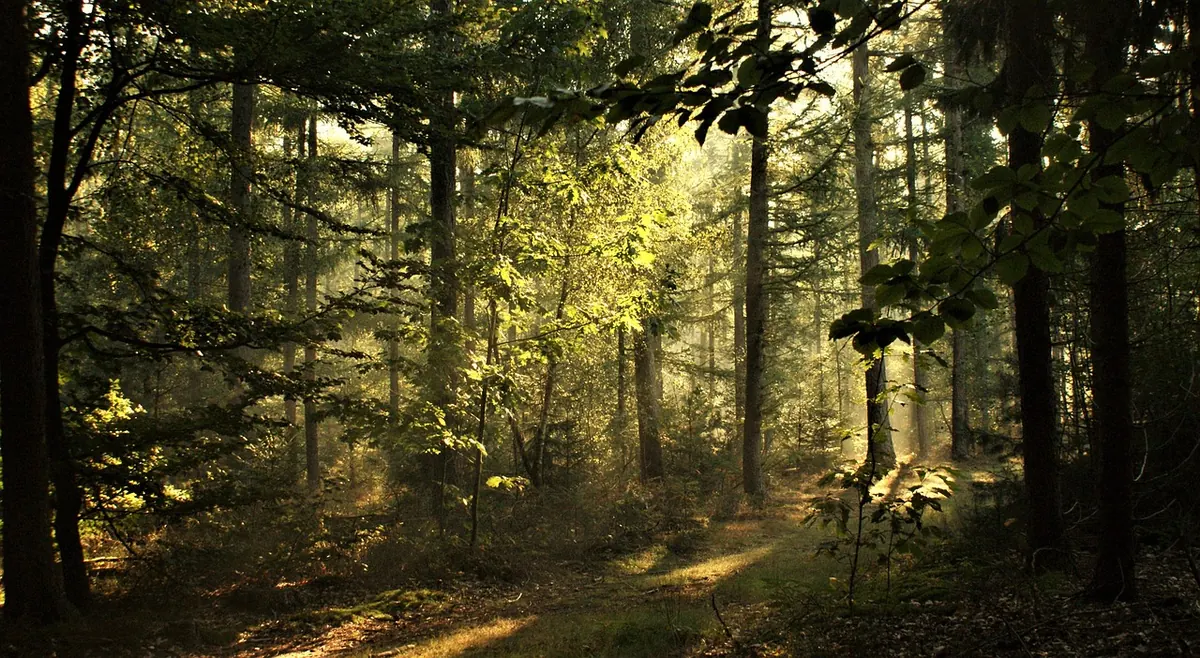
Photo: DariuszSankowski / Pixabay
Related posts
More stories you’ll love reading